
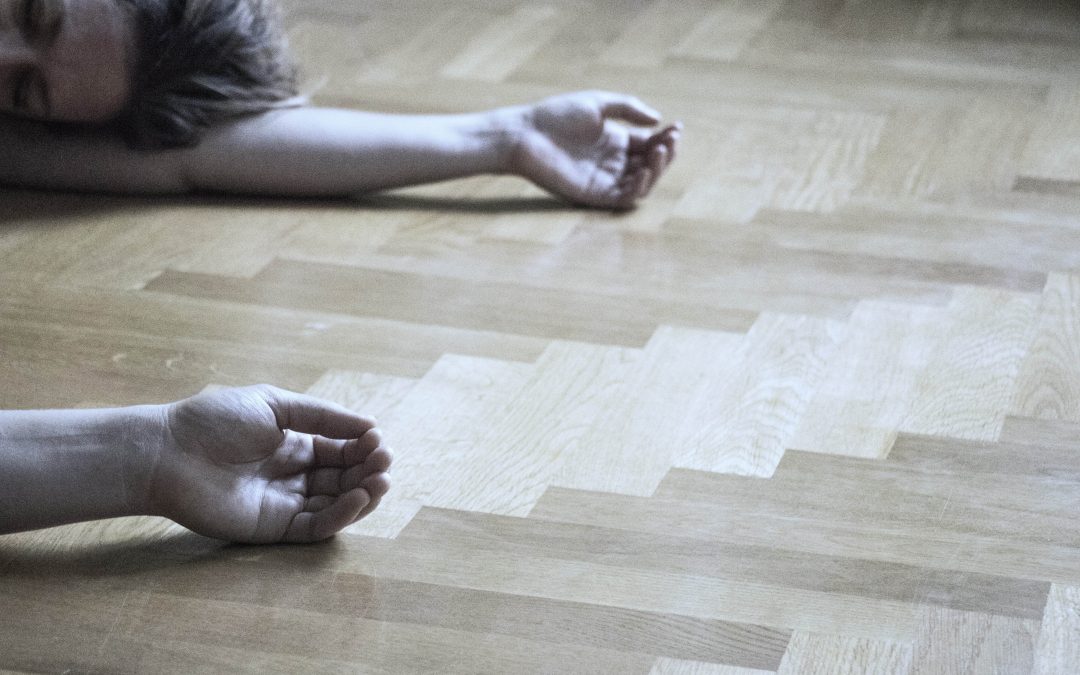
“I stretch every day, and still my back is stiff again by the evening.” I hear this sentence often. It is not a sign that someone is doing something wrong – it is a sign that stretching is simply not the right answer here.
A stiff back is rarely the problem
Muscles tense because the nervous system tenses them. When a muscle is hard all the time, it usually has a job: it is holding something that nothing else holds. Perhaps because the hips move very little with each step. Perhaps because the ribcage hardly moves when you breathe. Perhaps because an old injury has led one side to work harder than the other.
Stretching makes the muscle longer for a few hours. The job remains. So it tightens again.
What Feldenkrais does instead
In a Feldenkrais lesson there is no stretching and no strengthening. Something else happens: you move slowly, in small ranges and without effort – and notice what you are actually doing. Where do you stop? What moves along, what doesn’t? What happens if you try it differently?
That sounds unspectacular. The point is: the nervous system can only change what it notices. As long as a movement runs automatically, there is no reason to do anything differently. As soon as the difference becomes noticeable – “ah, this is easier” – the system chooses the easier option by itself. No one has to memorise it or practise it consciously.
That is why the movements are so small and slow. With great effort you can no longer perceive fine differences; all you feel is the effort.
Why the back is often not at the centre
Sometimes in a lesson we work mainly with the feet, the eyes or the jaw, and afterwards the back is freer. That is not a trick. The body works as a whole: if you hold your eyes still with every turn, you also turn your neck differently. If you use your ankles little, the work shifts upwards.
This is also the difference from an exercise programme. There is no standard exercise for the back, because there is no standard problem.
What you can realistically expect
Most people notice a difference after the first lesson: they stand differently, breathe more deeply, the head turns further. At first this difference is fleeting. For a habit of many years to change, repetition is needed – which is why there is a weekly course and not a one-off session.
And a clarification that is important to me: the Feldenkrais Method is a way of learning, not a treatment. I am a Feldenkrais practitioner, not a physiotherapist or doctor. Severe or persistent pain should be examined by a doctor. Feldenkrais can go well alongside that – not in place of a medical examination.
Where you can start
If you would like to try how it feels: the group lesson in Rossatz is the easiest way in; one lesson costs 15 euros. If you bring a specific theme, or following along in a group is difficult, an individual lesson is a better fit.
I am happy to answer questions beforehand at +43 699 17050606; many are already answered on the FAQ page.